
The problem
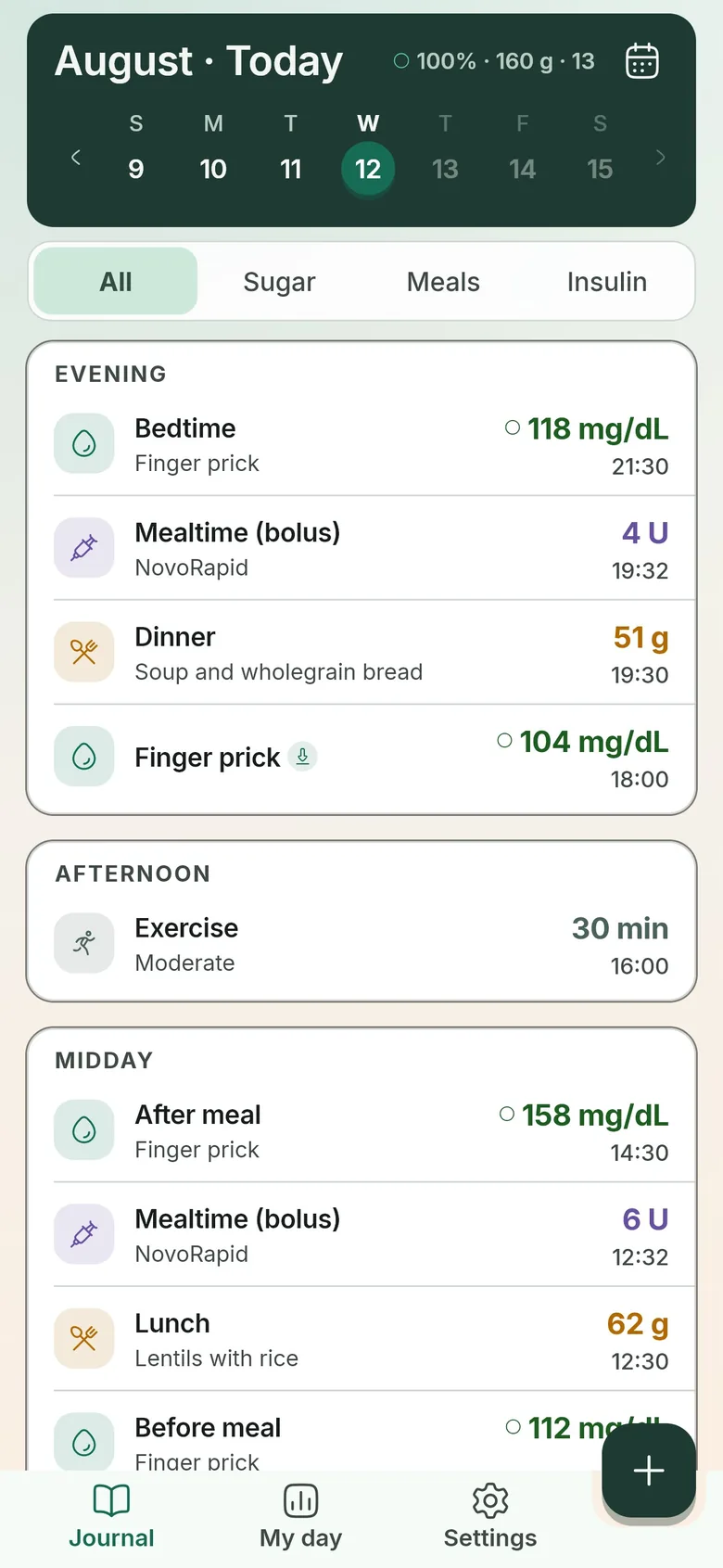
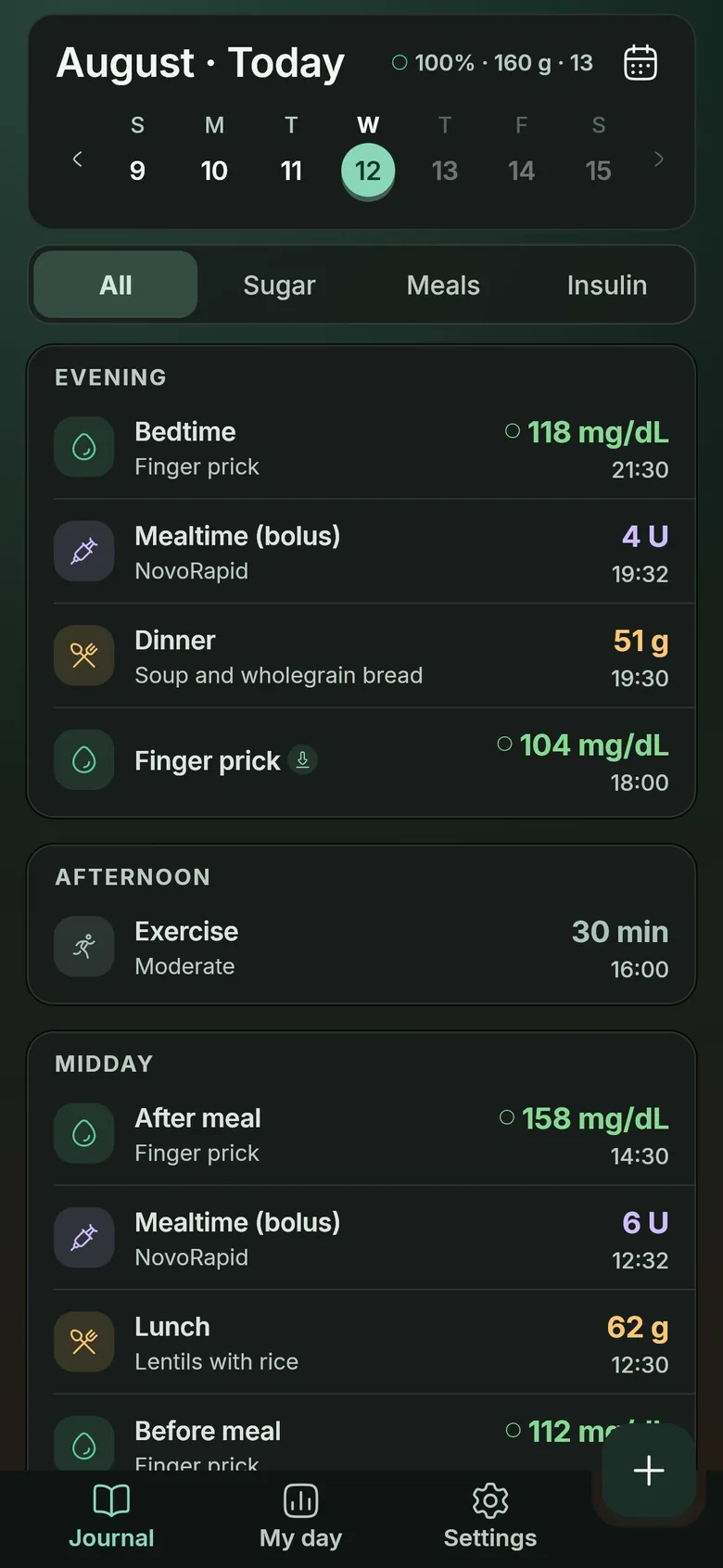
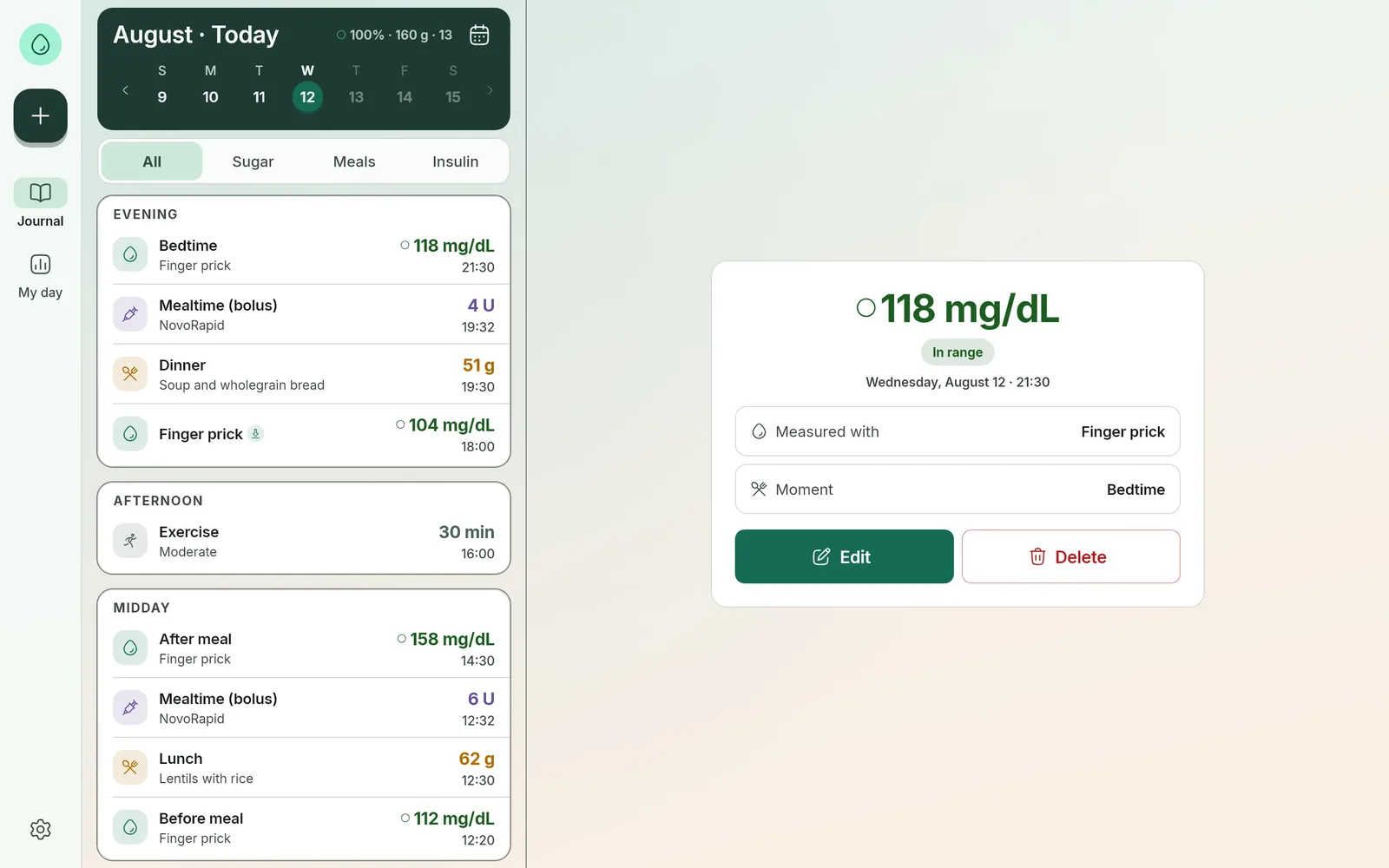
People living with diabetes are asked to keep a logbook: blood sugar readings, meals, insulin doses and anything else that affected the day. The entries only make sense side by side: what was eaten, what dose was taken and how the glucose responded.
EquiTable replaces that logbook. Its own site calls it "the diabetes diary you'll actually keep". It had to meet three requirements. Logging has to be quick enough to do every time. The record has to stay private until the patient chooses to share it. And the same app has to ship under more than one brand and in more than one country.
The approach
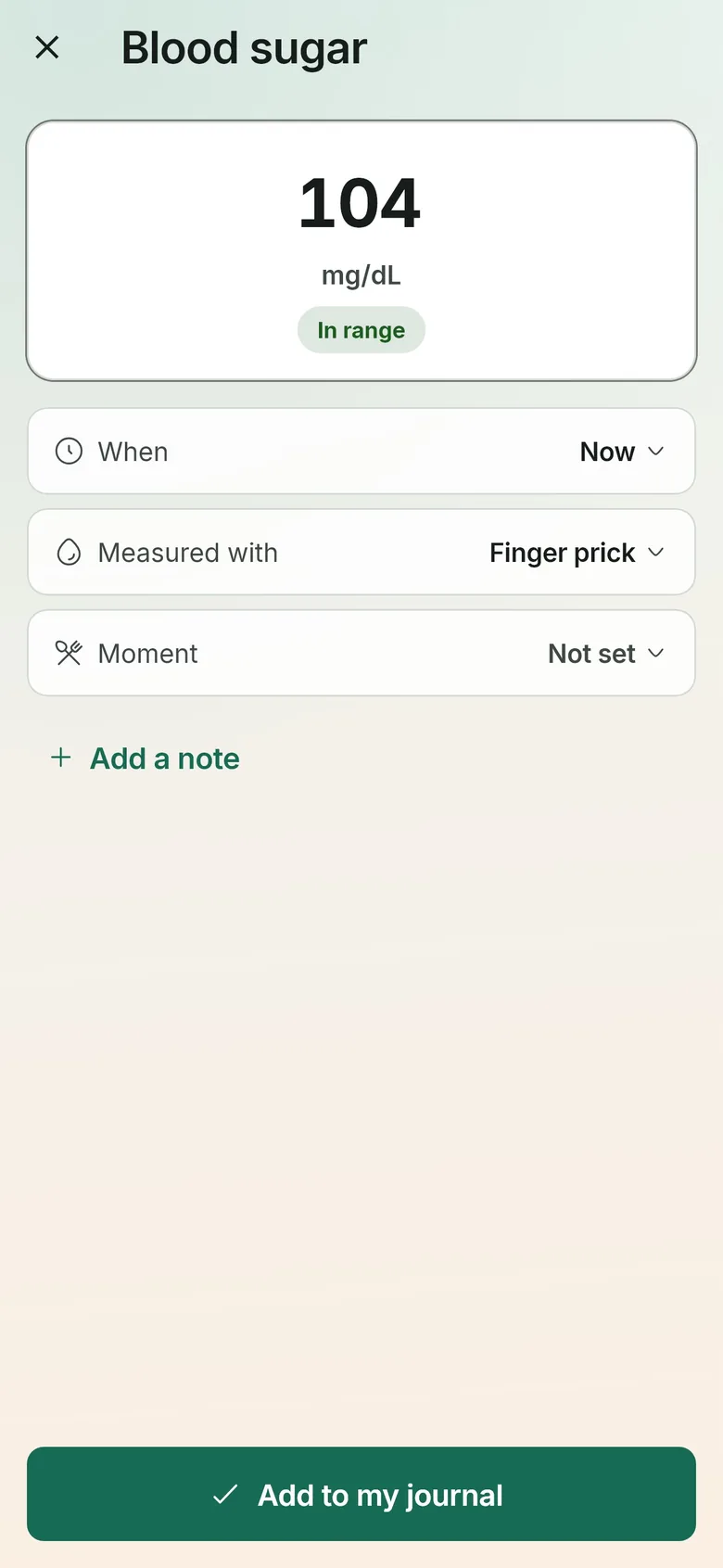
A diary, not a dashboard. The patient-facing text is warm and plain, and logging a reading takes about ten seconds: the value is the largest field and sensible defaults are already filled in.
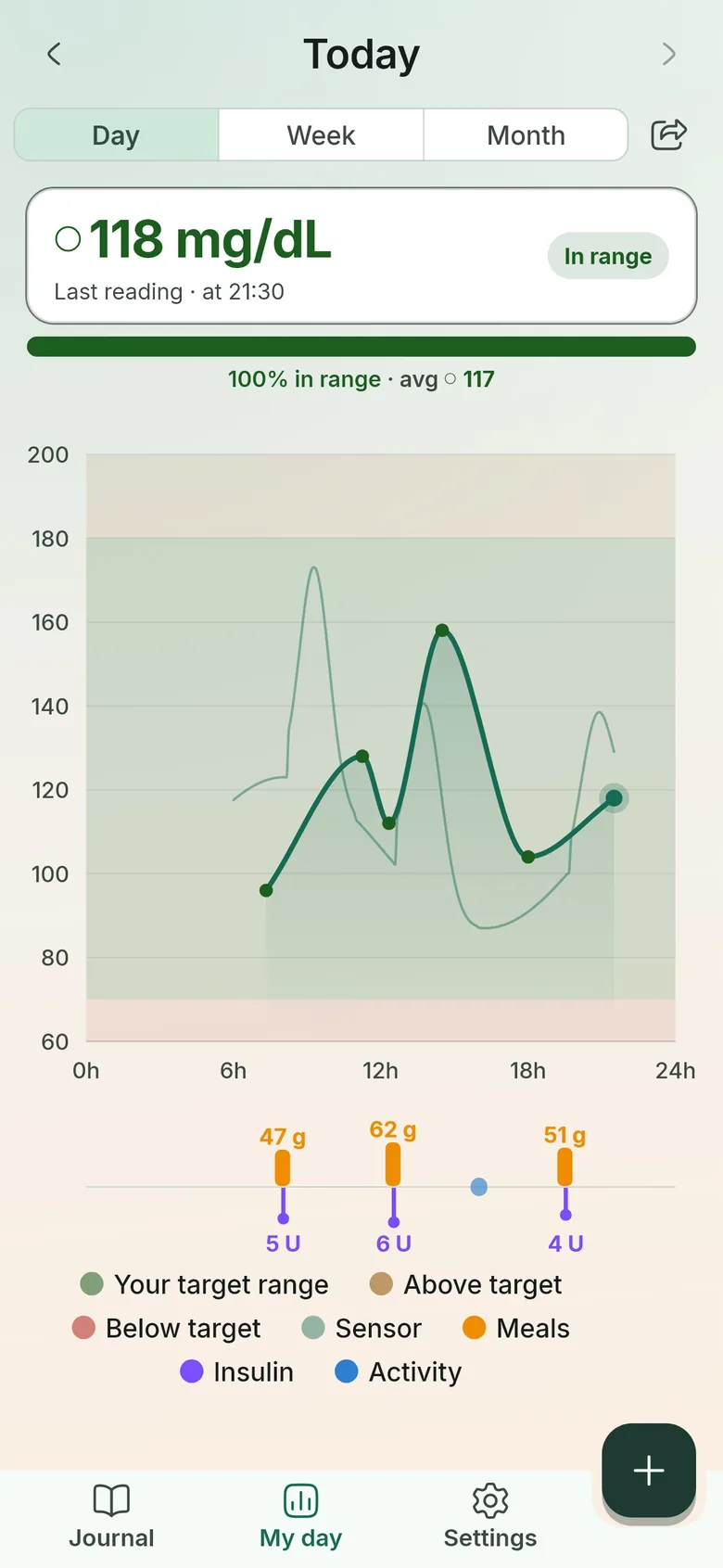
The day in one picture. "My day" draws the glucose curve over the target range. A strip beneath it places meals, insulin doses and activity on the same time axis, so cause and effect line up.
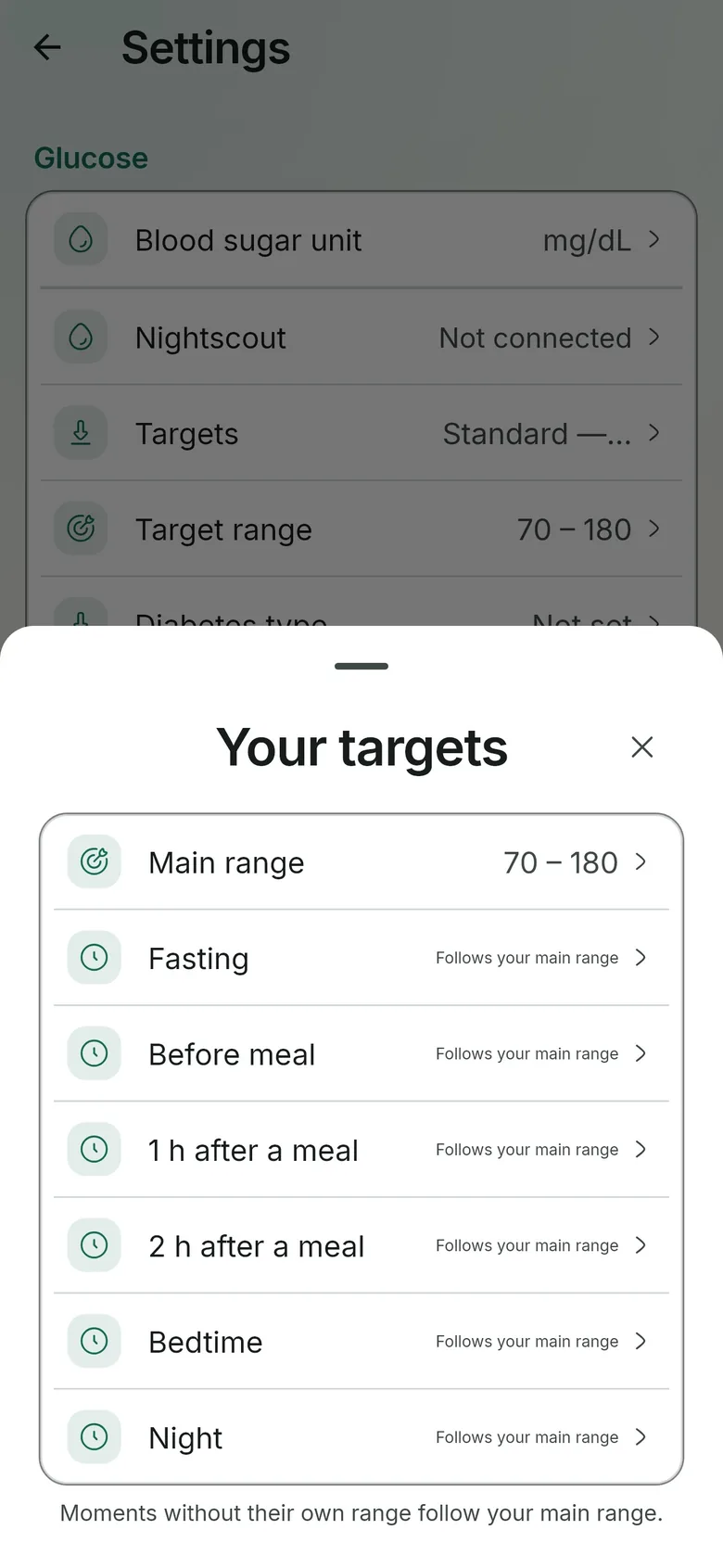
Targets that follow the day. A range can be set for each moment (fasting, before a meal, one or two hours after, bedtime, night) or taken from a published guideline preset, gestational diabetes included. Each reading is judged against the range for its moment. The presets are defaults to review with a care team, not advice.
Logging and visualisation only. EquiTable records the dose a person decided on. It never calculates or suggests one. Dose advice would make the app a higher-risk medical device, so that line is fixed.
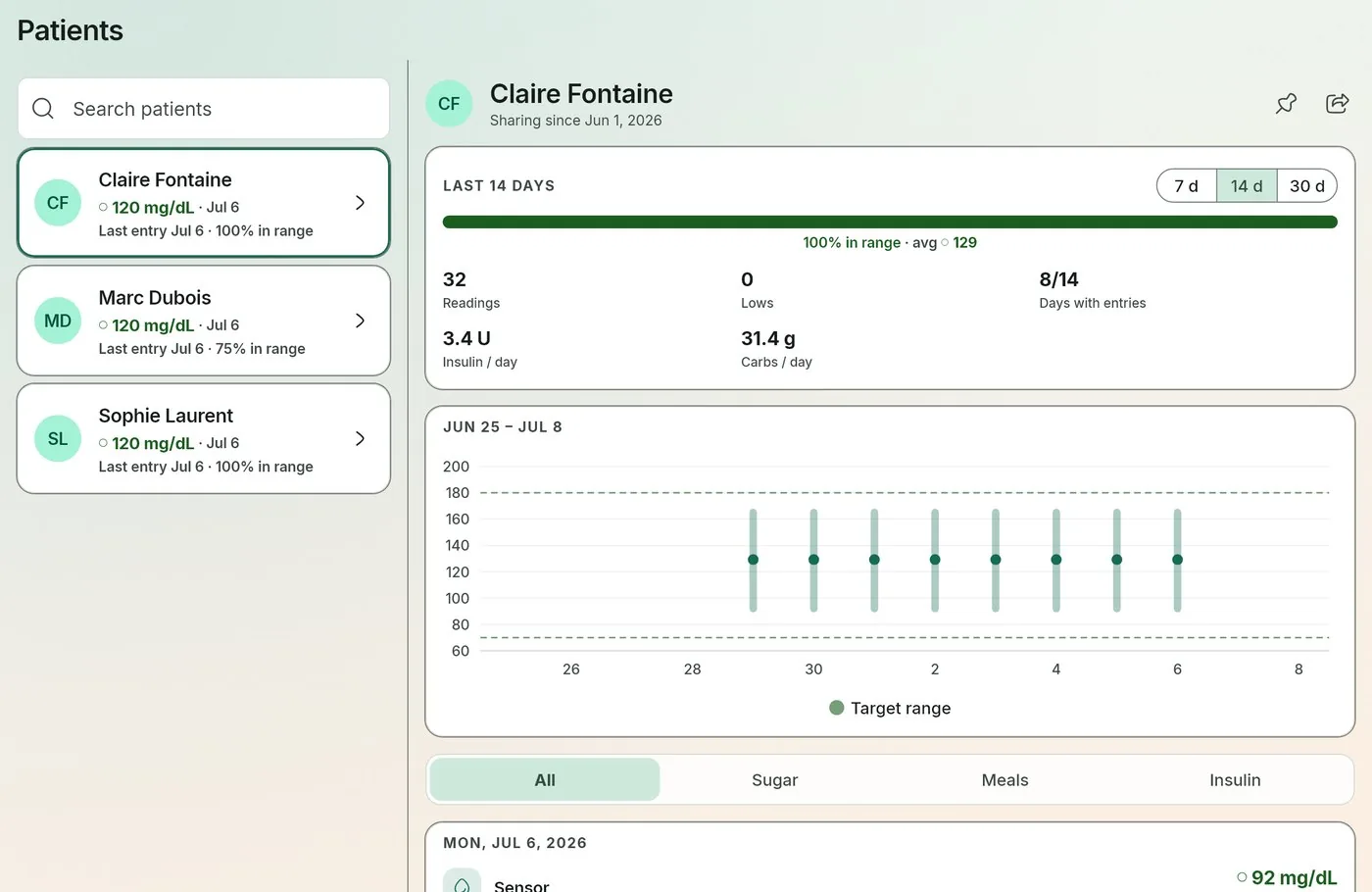
Consent decides who can read. A clinician sees a patient's journal only through a care link that the patient created and can revoke, and the doctor role grants no access by itself. What the clinician gets is a read-only consult view: time in range over 7, 14 or 30 days, flags for lows and severe highs, trends that open into any single day, and a PDF for the consult.
Offline first. The app is fully usable with no account and no connection. An account adds a private, synced backup.
Sensors by import. Readings from a continuous glucose monitor (CGM) arrive through Apple Health, Health Connect or Nightscout. The import is read-only and the sensor data stays on the device.
A free diary, with paid comforts. Logging, history, charts, food search and sharing with one person are free with no time limit. Premium adds automatic sensor import, the PDF report, custom target ranges and sharing with more than one person. If Premium ends, nothing already logged is hidden or deleted. Clinics and institutions can deploy the app with no paywall.
Accessible by rule. Touch targets are at least 56 dp, layouts hold at 200% text size, and colour is never the only signal: each glucose status also has a symbol.
One app, many brands and markets. Branding comes from one configuration object, and everything that varies by country (languages, glucose unit, legal wording, where the data is hosted) comes from another. Adding a brand or a market changes no feature code.
The architecture
The code is organised by feature: glucose, insulin, meals, journal, chart, reminders, sync, sharing and so on. Each feature has four layers (domain, data, application, presentation) and dependencies point inward only, so the domain layer is plain Dart with no Flutter and no database code.
- State: Riverpod with code generation for app state, and flutter_hooks for the state local to a widget.
- Models: freezed, with sealed classes for closed sets such as the kinds of journal entry.
- Storage: Drift on SQLite on all six platforms, compiled to WebAssembly on the web. On phones and desktops the local database is encrypted at rest.
- Medical entries are append-only. An edit adds a new row that supersedes the old one, and a delete adds a void record. Nothing is updated or removed.
- Sync without conflicts. Entries are append-only and carry IDs generated on the device (UUID v7), so syncing is a union of rows. Optional accounts and sync run on Supabase, where row-level security enforces the care links.
- One unit of record. Glucose is stored and computed in mg/dL only; mmol/L is a display conversion.
- Sensor storage. Sensor curves are stored compressed with a fixed error bound of ±3 mg/dL, and low readings are always kept exactly.
- Guard tests. A test fails when a UI string is hard-coded instead of living in the translation files, and golden tests cover each combination of language and glucose unit.
The results
Version 1.0.0, the first stable release, was completed in August 2026. It runs on iOS, Android, macOS, Windows, Linux and the web from one codebase, in English, French, Spanish, Arabic and Hindi, with light and dark themes. The product site, equitable.ghuyfel.com, presents it in the same five languages.